
On February 28, 2026, Trump started a war with Iran – a war that was never declared by Congress – and a war that did not involve an “imminent threat” from Iran. In this article, we will look at how the likely continuance of this war against Iran will lead, like a series of dominoes, to an Oil Crisis, a Food Crisis, a Monetary Crisis, a Job Crisis and a Debt Crisis – which in turn will lead to an Economic and Political Mega Crisis on a scale that will severely harm the future of our nation and the future of our world.
The flimsy claim for starting this war was that “Iran was about to create a nuclear bomb”. This excuse was remarkably similar to the false “Weapons of Mass Destruction” claim used to start the oil war against Iraq 20 years ago. But our own Intelligence agencies have stated that this claim is not true. In fact, years ago, the spiritual leader of Iran issued an order to NOT build a nuclear weapon. He asserted (correctly) that making a nuclear weapon would be morally wrong. By assassinating the very person who prevented Iranians from making a nuclear weapon, the US greatly increased the chances that Iran will make a nuclear weapon in the future.
The actual reason the US started the war was because the Israeli lobby (aka the War Machine) used massive amounts of bribes to control Congress and the White House. It was this corruption of our political system that will lead to the destruction of our economic system.
The Least Popular War in US History
The US War against Iran was, from the beginning, the least popular war in US History – and it is becoming less popular every month. According to a June 2026 Gallup poll, support for the Iran War in March was only 40%. By comparison, support for the 2003 Iraq War was 76% and support for the 2011 Libyan War was 47%. The most recent Iran War poll taken on July 13, 2026 concluded that support for the war had fallen to only 27%.
Historically, the longer wars drag on, the less popular they become. This will be particularly true with the Iran War due to its effect on oil prices, food prices and job losses. In addition, most Americans mistakenly believe that the US is winning the Iran War. When they find out the truth, namely that the US is actually losing the Iran War (a fact that is already being reported by Independent Media), support for the Iran War will sink like a rock.
The Coming Oil Crisis
Regardless of whether you are for or against this war, one of the many problems is that it led Iran to mine and close the Gulf of Hormuz - a very narrow waterway shown in the image below:
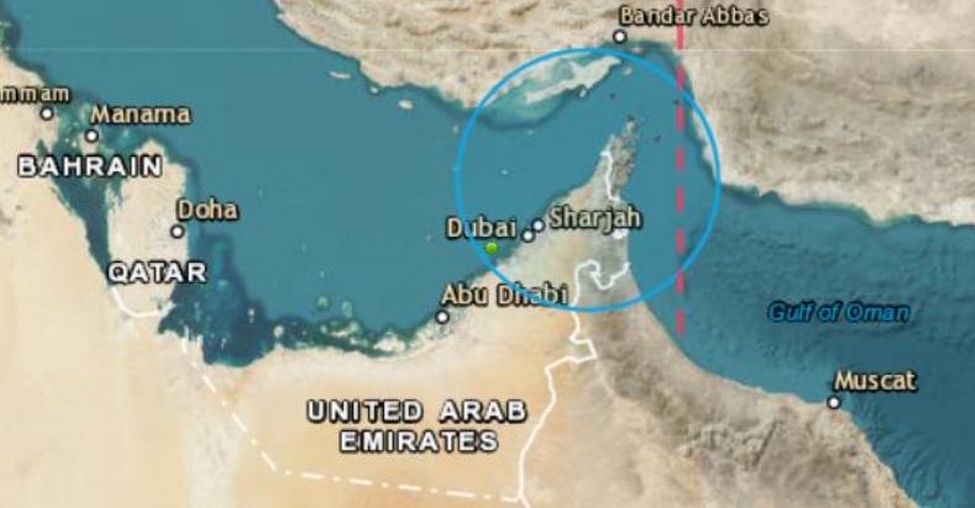
Before the war began on February 28th, about 25 percent of the world’s oil supply, natural gas supply and fertilizer supply went through the Strait of Hormuz every day. This included about 20 Oil Tankers per day (as well as a large number of Natural Gas and Fertilizer ships). Although some of these oil tankers carry 2 million barrels, others only carry a half million barrels. For the sake of simplicity, we will assume an average of one million barrels of oil per tanker – meaning 20 million barrels of oil left the Strait of Hormuz each day.
On about March 9, 2026, the Iranians closed the Strait of Hormuz. For the past 5 months (or about 140 days), the average number of tankers leaving the Persian Gulf has dropped to near ZERO. The following graph, indexed as a percent, has a yellow line confirming that the number of tankers leaving the Gulf in 2025 was about 20 per day - but the lines in blue and red show that the number of tankers leaving the Persian Gulf since March 9 to July 9 have been near zero.
This chart confirms that for the past 140 days, the world has lost close to 20 million barrels of oil per day. This is 2,800 million barrels of oil or 2,800 Tankers of oil. It would take not just 20 oil tankers a day, but 40 oil tankers a day for 140 days for the world to return to the oil supply it would have had if the war had never started.
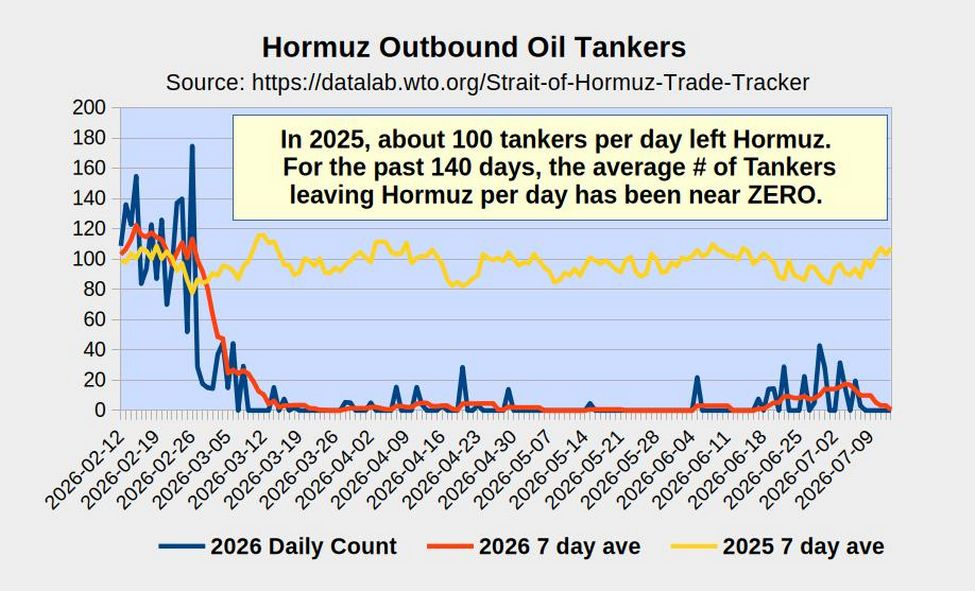
Every day the Iran War continues, the world will lose another 20 tankers of oil or another 20 million barrels of oil. Yet just days ago, Trump sent a letter to Congress telling them he intends to wage war against Iran for another 60 days. If this occurs, instead of a 140 day oil tanker deficit, there will be a 200 day oil tanker deficit (or 4,000 oil tankers) and an oil deficit of 4,000 million barrels of oil. It would take the world years to recover from such an old shock. But there is no guarantee that the US War against Iran will end in 60 days. Given what happened in Iraq and Afghanistan, the war against Iran could go on for several years.
The loss of thousands of millions of barrels of oil will affect the prices and availability of not just gas for our cars and food for our kids, but the price and availability of everything from the houses we live in to the clothes we wear. Nearly everything we buy has a connection to the price of oil.
Yet the legacy media has failed to warn Americans about any of this. Instead, the legacy media – and the political leaders they promote - seem to see nothing wrong with another 60 days of war with Iran. This casual form of insanity is due in part to the claims that the US has “plenty of oil.” While the US is one of the world’s biggest oil producers, we are also the world’s biggest oil consumers. In fact, the US is a net importer of oil. The US imports about 6 million barrels a day while exporting about 4 million barrels a day.
Why We Export Light Oil and Import Heavy Oil
While oil comes in all kinds of different weights, for the sake of simplicity, we will divide the world’s oil into light oil and heavy oil. Light oil has short chains of carbon molecules which produce a small amount of energy when broken apart. Heavy oil has much longer chains of carbon molecules which produce a much larger amount of energy when broken apart.
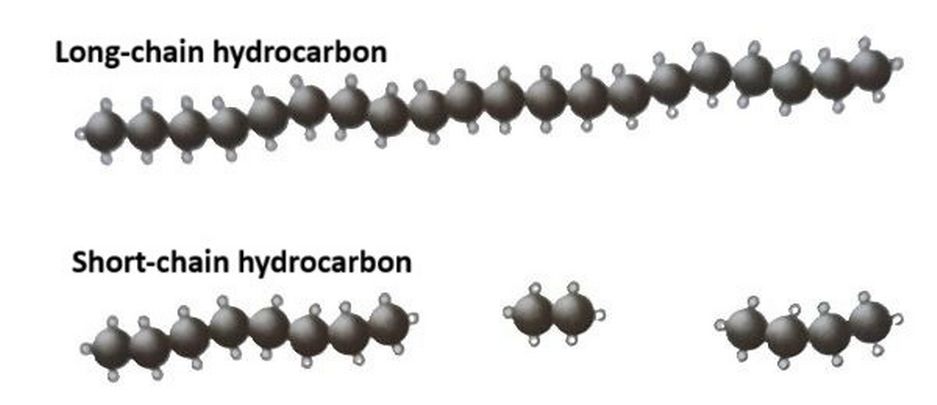
The US produces about 8 million barrels of “light sweet oil” per day (which is used for gas for cars) and we export 4 million barrels of this light oil to places like Europe. But we only produce about 2 million barrels per day of “heavy sour oil” (which is used to make diesel for trucks and jet fuel for airplanes). Because we have a lot of trucks and airplanes, we need to import 6 million barrels of heavy oil each day to keep our trucks and planes running. Converting the above barrels of oil to oil tankers, the US produces about 8 tankers of light oil a day and 2 tankers of heavy oil a day. We export about 4 tankers of light oil a day and we import about 8 tankers of heavy oil a day.
The Persian Gulf states are just the opposite of the US. They export about 80% heavy oil and 20% light oil. So, of their 20 oil tankers they export each day, about 16 tankers per day are heavy oil and 4 tankers per day are light oil. The loss of 16 tankers of heavy oil a day is why the price of diesel for trucks and jet fuel for planes has risen more rapidly than the price of gas for cars. Because diesel burning trucks are used to transport food to grocery stores, this huge loss of diesel fuel is also why the price of our food has risen more rapidly than the price of gas for our cars.
How Supply chain timelines have delayed the crisis and lulled us into a false sense of security
The world oil supply was not immediately affected by the loss of 20 oil tankers a day because oil tankers move very slowly. A super tanker moves at only 10 to 12 miles an hour or about 300 miles a day. An oil tanker going to North or South America or Europe takes 40 to 60 days. Thus, there was a 40 to 60 day supply of oil in tankers out on the oceans which gradually arrived in various countries and were unloaded by about May 1. This very long delay lulled the world into a false sense of security. At the same time, US Oil Reserves were released not because they were needed, but merely to manipulate the oil market by artificially depressing the price of oil.
However, since May 1st, for the past 80 days, there has been almost no oil tankers coming out of Hormuz – and the oil out on the open sea has already been delivered. This is 20 tankers a day x 80 days or 1600 tankers lost in the past 80 days.
Calculating the time until End of the US Strategic Oil Reserve
The US Strategic Oil Reserve was used to offset some of this loss by sending about 100 tankers of mainly light oil from the US to Europe. It was about one to two oil tankers a day or about one to two million barrels of oil a day – supposedly “loaning” the Europeans the oil that they will pay back at some point in the future.
As a consequence, the US Oil Reserve fell from about 410 million barrels to about 310 million barrels in the past three months. This is the equivalent of about 100 Gulf Tankers – a tiny fraction of the 1,600 Gulf tankers of actual oil lost in the past 80 days. To make matters worse, there are problems with the 310 million barrels of oil remaining in the US Oil Reserve that will prevent more than about 30 million more barrels of oil being taken out. The problem is that the oil is stored in salt mines and water will need to be pumped into the salt to remove the oil. The water will damage the salt holes that the oil is stored in.
On Wednesday, June 17, 2026, Donald Trump signed the MOU with Iran giving Iran control of the Strait of Hormuz. The same day, Trump explained that the reason he was forced to sign the MUO was that the global oil reserves would run out “in about 4 weeks.”
Here is his actual statement:
“We run out of reserves at about four weeks. You know, there are reserves all over the world, and we would really run out, and there will be a time when you wouldn’t be able to get it. It would be bedlam.”
Add 4 weeks to June 17th and we arrive at Wednesday July 15, 2026.
Trump was likely basing his estimate on a shocking 63 pages Government Accountability Office Report originally released to Congress on May 29 2026 - but not released to the public until July 1, 2026. Here is a LINK TO THIS REPORT.
In this report, we learn that the US Strategic Petroleum Reserve (SPR) four largest wells the SPR’s wells are far past their design life of 20 to 30 years. In fact, they are 35 to 40 years old. We further learn that one of these four huge SPR wells (Big Hill) is not operating at all! It is currently inoperable because “critical infrastructure repairs were neglected.”
Go to Page 42 and take a close look at Table 2. It indicates that the SPR's effective capability had fallen to about 61% of its original design capacity.
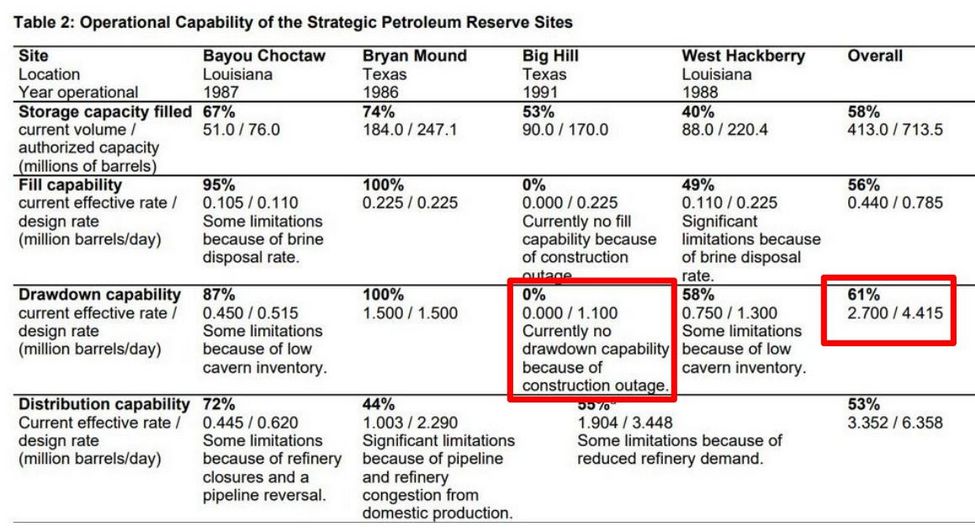
The original design capacity was 714 million barrels of oil. 61% of 714 is 436 million barrels. Subtract 436 from 714 and the result is 278 million barrels. In plain English, this is the difference between design and reality.
Put another way, the GAO report is saying that the actual amount of oil available is 278 million barrels less than what we have been told in the past. When the reserve reaches 278 million barrels, it will actually be at ZERO barrels.
Congress has been aware of this problem with the SPR falling apart for many years – which is why they previously set the minimum legal capacity at 252 million barrels. But the GOA report confirms that the actual problem is much worse. The real actual minimum is 278 million barrels.
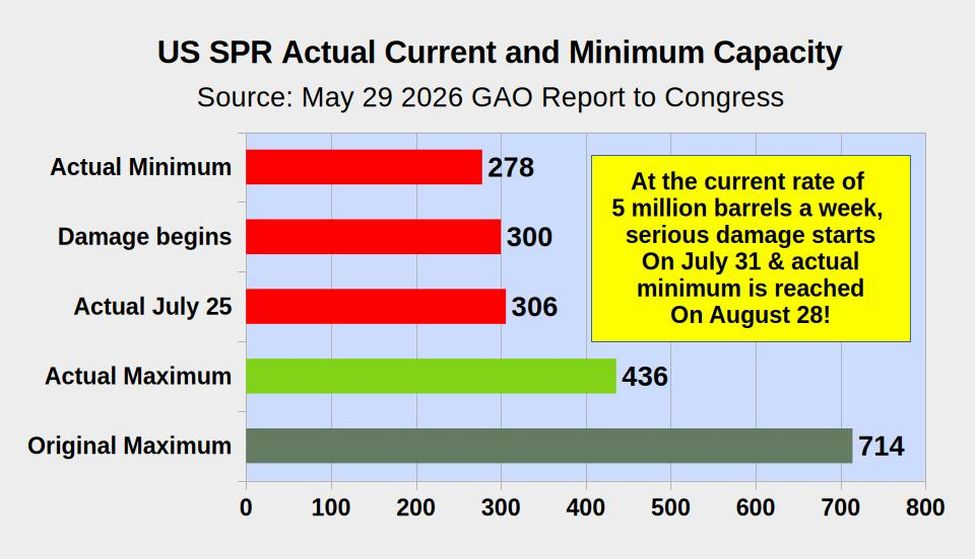
The reason Trump was wrong about running out of oil in four weeks was because at the time, there was 320 million barrels left in the reserve and the US was pulling 10 million barrels a week out of the reserve. At that rate, 4 more weeks would have put the reserve at 280. Signing the MOU allowed a few tankers of oil to leave the Persian Gulf over the next 10 days – which in turn allowed the US to drop down to 5 million barrels a week – which doubled the time until Doomsday from 4 weeks to 8 weeks. But even at 5 million barrels a week, there is only two weeks until severe damage begins to the SPR and less than six weeks until there is no more oil that can be pulled out of the SPR. At that point, the US will no longer be able to use the SPR to “rig” the oil market. Thus, we will see major price increases in the price of oil and the price of gas by the end of August – if not sooner.
Here is the official table as of Friday July 17, 2026:
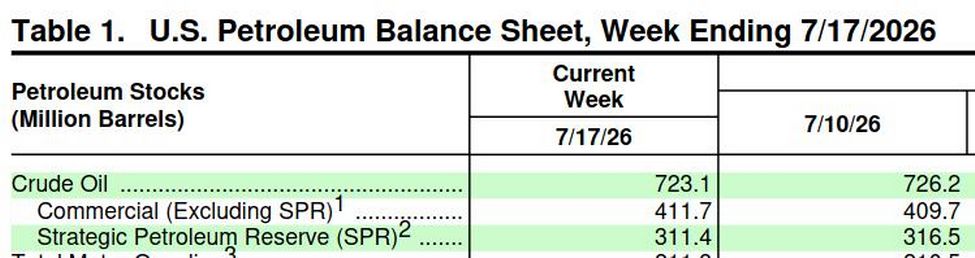
See Data Overview PDF Table 1 Line 3.
Note that the SPR draw down rate is 5 million barrels a week and the ending amount is 311.4. It is currently one week later, Friday July 24, 2026. So the current amount left is 306.4. On Friday July 31, 2026, the amount will be about 301.4.
In June 2026, SPR expert, Amos Hochstein, claimed at the Global Energy Forum that he “does not know anyone” who believes you can go below 300 million barrels. What he was actually saying was that no wise person would go below 300 million barrels. According to the May 29, 2026 GAO report to Congress, severe and permanent damage begins to occur at about 300 million barrels. However, if one was willing to deal with the damage, one could go down to about 280 million barrels. But this would be the absolute “Bottom of the Barrel.”
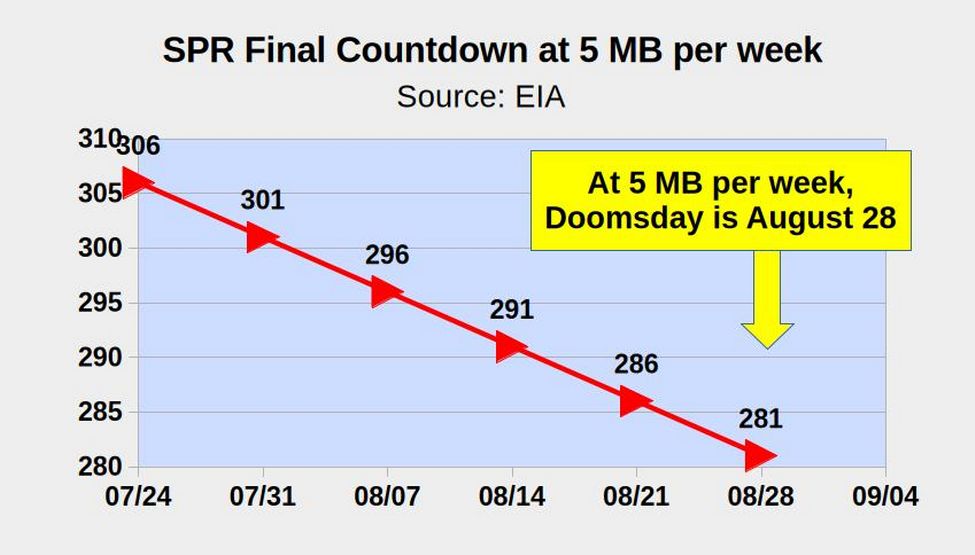
In summary, the wise minimum will be reached on about July 31, 2026. And if the draw down continues at 5 million barrels per week, the absolute minimum will be reached 4 weeks later, on August 28, 2026.
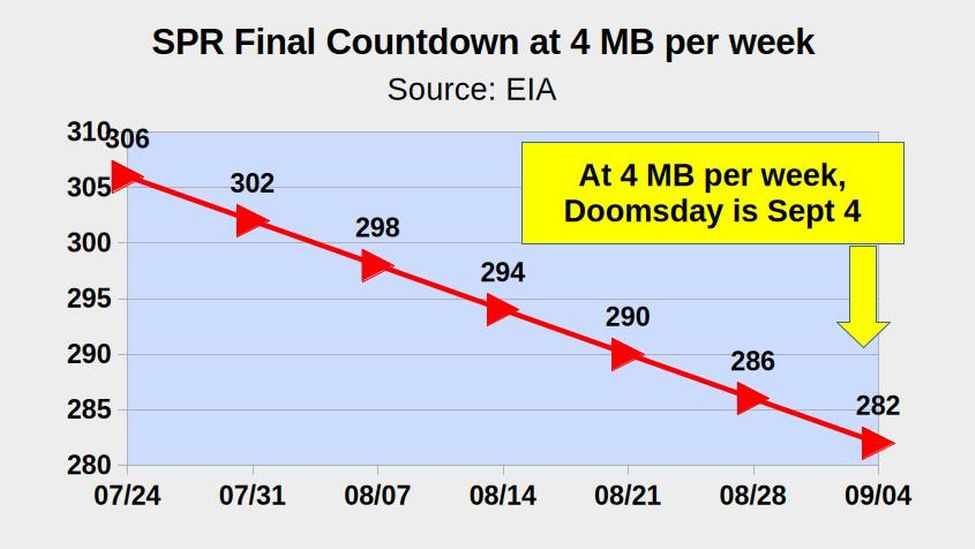
There are rumors that the draw down rate might be reduced to 4 million barrels this week. But this is just delaying the inevitable by only one additional week – see graphs below.
After the SPR hits 280 million barrels, the US will no longer be able to use draw downs from the SPR to manipulate the price of oil. The price of oil will almost certainly go way up followed shortly thereafter by big increases in the price of gas just a few weeks before the 2026 General Election.
The Final Countdown of the US Strategic Petroleum Reserve
If you want to track the final countdown of the US Strategic Petroleum Reserve just go to THIS PAGE posted by the US Energy Information Administration (EIA) every Wednesday just before Noon.

Then click on the PDF on the right side of the Data Overview row. In Table 1, look at row 3, Strategic Petroleum Reserve. You will see the number for called “current week” (which is actually Friday of the previous week) and for the previous Friday (which gives us the weekly draw down rate).
Here are the dates for the next six EIA Reports:
Wednesday July 29… EIA Report for Friday July 24
Wednesday August 5 EIA Report for Friday July 31
Wednesday August 12 EIA Report for Friday August 7
Wednesday August 19 EIA Report for Friday August 14
Wednesday August 26 EIA Report for Friday August 21
Wednesday September 2 EIA Report for Friday August 28.
Here is the SPR Final Countdown Graph at 5 MB per week
Here is the SPR Final Countdown Graph at 4 MB per week
Similar Problems with Liquid Natural Gas
Liquid Natural Gas (LGN) tankers have suffered a similar fate as have fertilizer vessels. So the world is not only facing an Oil shortage problem, but also a natural gas shortage and fertilizer shortage problem which has already driven up the price of food and natural gas – price increases which are certain to grow in the coming months. Before we cover the LNG and fertilizer problem, we need to review the serious obstacles that are nearly certain to delay any real solution to these problems.
How long before the oil, LNG and fertilizer can return to normal?
US leaders have repeatedly claimed that the war with Iran was “over” and that the Strait of Hormuz was “open.” However, there are numerous websites such as marinetraffic.com where you can check the tankers in real time. You will see that there are no tankers leaving Hormuz right now. Thus, the war is not over and the Strait of Hormuz is not open.
But even if the Iran War ended and Hormuz was magically opened tomorrow, because of the time it takes slow giant ships to travel around the world, it would take at least 60 days of 20 to 40 ships per day leaving the Persian Gulf to normalize the world oil supply, natural gas supply and fertilizer supply. But Hormuz is not likely to return to normal anytime soon – if ever. During the first two weeks of July 2026, 43 million Iranians made it clear during the funeral marches for their assassinated religious leader that they do not want their new leaders to negotiate with the US killers of their fallen leader about anything. They all wore black clothes and chanting “Death to America.” Millions of them carried red flags. The red flag in Shia Islam stands for “Blood for Blood” revenge.
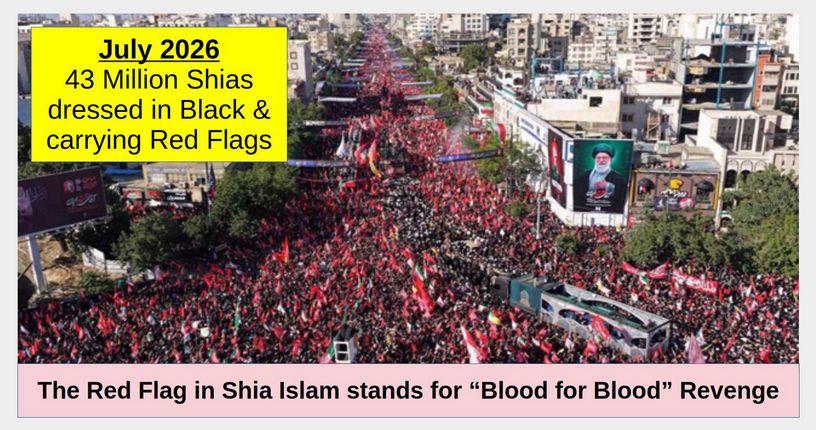
In a message issued following the funeral ceremonies for their martyred Leader, Ayatollah Seyyed Ali Khamenei, the new Leader (his son) praised the massive public participation in Iran and Iraq, calling it an extraordinary display of support. “We pledge to avenge the pure blood of the martyred Leader and all the martyrs of these two wars from the criminal and disgraced murderers.”
The new Ayatollah declared that avenging the blood of the martyred Leader (his father) and all the martyrs of these two US-Israeli wars of aggression against Iran was “the demand of our nation and must certainly be carried out.”
On July 9, 2026, a leader of the Iranian navy warned that “foreigners have no place in this land and the Strait of Hormuz”, adding: “any adventurism by the terrorist U.S. military and any interference in determining the routes of maritime traffic will not only be met with our decisive response, but will also seriously disrupt the gradual reopening process and put the interests of countries using the Strait of Hormuz at serious risks”.
On July 12, 2026, the leader of Iran’s Revolutionary Guard, stated "We will not allow a rogue and child-killing army from the other side of the world to continue its illegal interference in with the Strait of Hormuz”.
On July 13, 2026, Iran Minister of Foreign Affairs Baghaei held a Press Conference where he stated:
“This war truly reaches the height of insolence for those whose hands are stained with the blood of innocents. Those who are responsible for the martyrdom and murder of thousands of our compatriots… Lying has become part of the behavior pattern of the American ruling class…”
“The southern part of the Strait of Hormuz was misused to harm Iran's security and national interests… We cannot allow America and the Zionist regime to use this strait for Traffic that is harmful to Iran's national sovereignty and national security… This is the reason It was insisted that in paragraph 5 of the memorandum of understanding that future management of the Strait will be by Iran in consultation with Oman… We will not allow the Strait of Hormuz to become a place of security threat. The important point is that the Iranian people have a very bitter experience of America's breach of treaty. For us, diplomacy is a tool, and I think that in this regard, the Iranian people still support their decision-makers.”
“Wherever diplomacy serves Iran's national interests, everyone will definitely support it with one voice. Regarding the method and quality of negotiation, it is natural that opinions differ, but on the main issue, I think, thank God, there is complete consensus. We will use any means and methods necessary to ensure our national interests and national security.”
Also on July 13, 2026, Iranian Foreign Minister Araghchi held a Press Conference in which he stated:
“Iran reserves all options to defend its security and its people… Attacking a nuclear power station is an unforgivable violation of international law… We were in diplomacy, but we were attacked militarily (by the US) and they only understand the language of threats and force… There is no red line that they have not crossed and the most dangerous one happened last night when our nuclear power station was bombed by the Americans. Our people are united and we stand firm against any aggression.”
“President Trump was elected on a platform of putting an end to America’s costly involvement in Forever Wars. He has betrayed not only Iran by abusing our commitment to diplomacy but also betrayed those who voted for him in the last American election. “
On July 14, 2026, the Iranian Parliament voted to end the Memorandum of Understanding. They stated that Iran will not enter into any further negotiations with the United States. It is therefore likely that the price of gas for our cars will go up in the coming months. But what will really go up is the price of diesel and the price of food.
The Coming Food Crisis
We turn now to the risks of a global food and hunger crisis if the Strait of Hormuz remains closed to shipments of fertilizer, oil and natural gas. The Food and Agriculture Organization, or FAO, warned that a prolonged crisis in the strait could lead to a global food catastrophe due to rising oil prices and disruptions to the fertilizer supply chain.
While the legacy media has focused on the price of a gallon of gas, the real problem will be the rising price of food. As the price of gas goes up, Americans can and will find ways to cut back on gas – which itself will help lessen gas price increases. But it is much harder to cut back on food. We will need to keep buying food no matter how high the price of food gets. In fact, as the supply of food decreases because of the lack of fertilizer, Americans will likely begin to hoard food - which will cause food prices to explode. About half the world's food is grown using fertilizer, so prolonged supply disruptions will have major implications for food availability.
Because fertilizer is important for grain production, fertilizer shortages and high prices affect the entire food supply chain. Fertilizers also account for about half the cost of growing grains. According to the 2022 Commodity Costs and Returns data from USDA’s Economic Research Service, fertilizer costs account for about 45 percent of operating expenses for U.S. wheat and corn farms.
The War against Russia had already created a shortage of fertilizer
Contrary to what the legacy media has repeatedly told the American people, the US War against Russia did not begin with a “Russian invasion of Ukraine” in February 2022. Instead, it began with a CIA coup of the Ukrainian government in February 2014. This led to a Civil War between the Russian speaking people in Eastern Ukraine against US funded Nazis in Western Ukraine. Eventually, the Russian speaking people in Eastern Ukraine voted almost unanimously to join Russia.
By 2020, both sides essentially became “proxies” for the US and Russian militaries. In February, 2022, Russia sent troops in to protect the Donbass region from an anti-Russian military force funded entirely by the US. This Proxy War led to Western economic sanctions against Russia and attacks against Russian shipping in the Black Sea. This created a shortage in fertilizer because, according to a 2020 United Nations report, other than the Persian Gulf states, Russia was the world’s largest supplier of fertilizer.

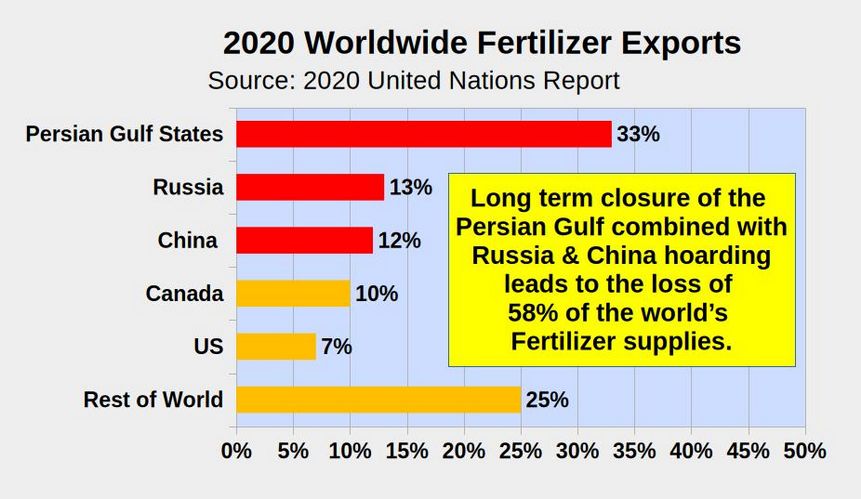
Recently both Russian and China announced they were restricting fertilizer exports in order to protect their domestic supplies. As a result, should the Persian Gulf remain closed for an extended period of time, the rest of the world will face the loss of 58% of the world’s fertilizer supplies.
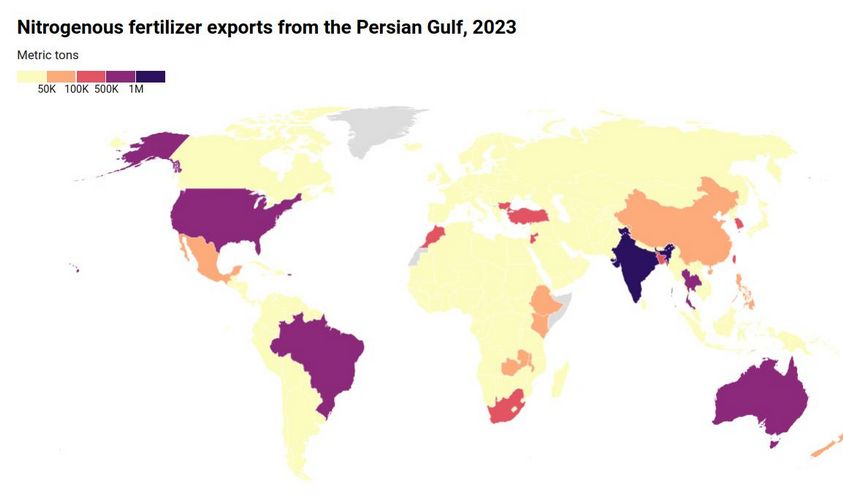
In 2025, about a third of the world’s fertilizers passed through the Strait of Hormuz. Below is a chart of where this Persian Gulf fertilizer went to:
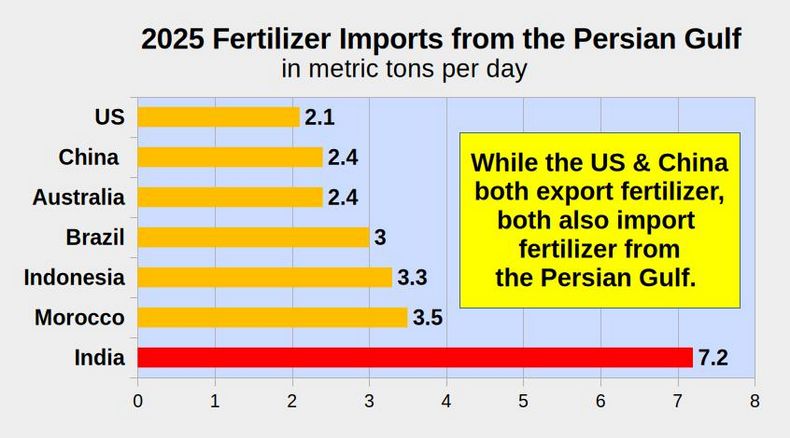
Assuming that the Persian Gulf exported a total of about 26 metric tons per day in 2025, the above chart can be converted into a similar percent of the world’s fertilizer imports. In other words, the US and China both imported about 2% of the world’s fertilizer from the Persian Gulf – making their net exports only 5% and 10% of the world’s total fertilizer exports. As supplies tighten, it is likely that the US and Canada will also restrict exports.
The US Proxy War against Russia just blocked the export of both Russian and Ukrainian Grain
Wheat is one of the world’s most important crops, being a key source of food for human consumption and animal feed. Russia is the world’s leading exporter of wheat, followed by the US, Canada, France, Ukraine and Australia. Ukraine and Russia account for a third of global wheat supplies.
Nearly all Ukrainian grain is shipped from Odessa which is on the Black Sea. Under a deal meant to allow both Ukraine and Russia to ship grain through the Black Sea, for the past several years, Odessa ports had been exporting about 6 million metric tons of grain a month. However, the deal ended in July 2026 after Ukraine launched a series of attacks on Russian shipping in the Black Sea. Ukraine attacked 13 to 21 Russian vessels in the Sea of Azov on July 10 2026.
Russia responded by attacking Odessa and nearby ports for 4 consecutive nights. At the same time, Ukrainian drones attacked more Russian ships in the Black Sea, thereby blocking about a quarter of Russia's own wheat exports. The grain shipping disruption has hit at the worst possible time. The harvest season is now underway in both Ukraine and Russia. In addition, a record drought caused a 30% drop in Australia wheat exports in 2026. World wheat markets reacted to the Ukraine and Russia attacks combined with the Australia drought with wheat rising to $6.82 a bushel on July 17 – a 35% increase over 2025. The following chart shows that the price of wheat has increased significantly in the past year:
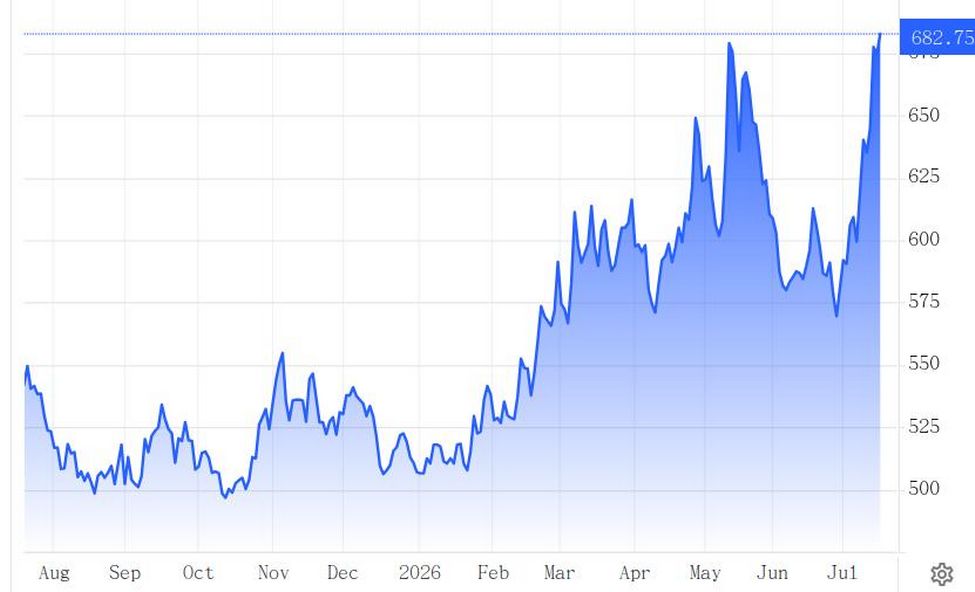
Thus, there was already a worldwide food shortage even before the Persian Gulf closure was restarted in July 2026. One can only imagine what will happen to the price of wheat in the coming year.
Short term versus Long term Consequences
There is a much longer delay in the timing of the food crisis than in the oil crisis. It may take an entire year to feel the full effect of a lack of fertilizer. In the short term (in other words through the Fall and Winter of 2026), the price of food will go up gradually just because the price of diesel to transport the food to stores will go up gradually. But in the long term (in 2027 and beyond), the price of food will skyrocket because of an entirely different problem - a shortage of fertilizer.
Below is a chart of US Fertilizer imports by month. The chart shows the month it arrives in the US. It likely left the Persian Gulf two months earlier:
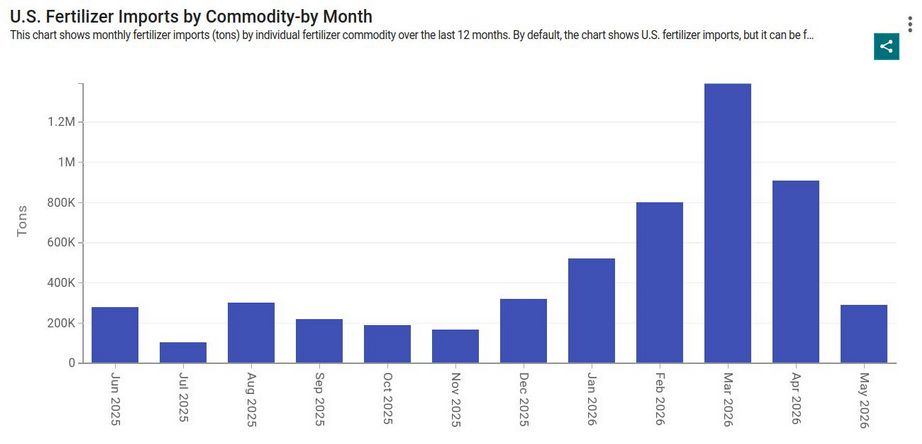
As the chart above shows, in 2026, the Spring planting season was barely affected by the closure of Hormuz. The fertilizer ships traveling to ports around the world had already left Hormuz and most farmers has already ordered and received their Spring and Summer planting fertilizer. The above chart shows that the two biggest months for fertilizer imports are March and April so those ships left Hormuz in January and February when the prices were still low and the supply was high. In the US, by July, the price of fertilizer increased by 50%. But very little fertilizer will be bought until next January. These cost increases will be passed on to the consumer when the crop is harvested in the Summer and Fall of 2027 – and these prices increases will be in addition to the increase in the price of diesel used to bring the food to our grocery stores.
The closure of the Persian Gulf will cause a shortage of fertilizer for the Fall and Winter planting season. But in the northern hemisphere (including the US), the Fall and Winter crop is not that big anyway. The US also has a huge amount of food stored in warehouses. So the big shock in the US is going to come with the Spring 2027 planting season. There are going to be bidding wars for fertilizer - and smaller farmers are likely to be priced completely out of the market. Thus, fewer crops will be planted in Spring 2027 meaning fewer crops will be harvested in the Summer and Fall of 2027. Fewer crops are going to cause food shortages and sticker shock in food prices. Food prices could double and even triple by Fall 2027. Some food will run out and not be available at all. The wealthy class may not even notice these price increases. But poor families – and especially families with kids – will have a much harder time putting food on the table.
Estimating the impact in the US of lower fertilizer supplies due to the Iran War
As noted earlier, roughly a third of the world's fertilizer must pass through the Strait of Hormuz. Here is a chart confirming that the US is one of the countries that imports more than 700 million metric tons of nitrogen based fertilizer per year:
But there is another obstacle once those 700 million tons of fertilizer reach the US – namely the US Fertilizer Corporate Monopolies
The US Fertilizer Corporate Monopolies
The shortage of fertilizer in the US in 2027 will be made much worse by the corrupt US Fertilizer Corporate Monopolies. In September 2024, a group of farmers called Farm Action published a 200 page report explaining that four multinational corporations now control the food supply in the US. Here are a couple of quotes from this report:
“This report sets out definitive evidence that a handful of monopolistic corporations have consolidated a dangerous amount of power over America’s food and agriculture system. Three multinational corporations now monopolize the domestic markets for nitrogen, phosphorus, and potassium fertilizers. Since the Big Three consolidated monopoly power over their respective segments of the fertilizer sector in the 1990s, they have raised fertilizer prices, cut fertilizer output, and reduced the quality and selection of fertilizer products available in the United States. “
“In 2021, the wholesale fertilizer price index increased by more than 60% compared to 2020 levels.527 Nitrogen fertilizer prices increased 95%, while potassium fertilizer prices increased 70%.528 In 2022, wholesale fertilizer prices reached even higher — averaging 132% higher than 2020 levels… Altogether, these dynamics have left US fertilizer markets in a state of near-permanent scarcity.”
Joe Maxwell, former Lt. Gov. of Missouri and Founder of Farm Action stated:
“Farmers in the US are being squeezed on the input side; fertilizer prices have doubled, and diesel fuel has gone up 40%. US farmers will lose $31 billion this year, between the monopolistic policies of international agribusiness and the wars… The US government has become just an arm of multinational corporations to push their control over our food supplies… As a result of these corporations inflating the price of fertilizer, many smaller farmers have been driven out of business. Every year, more than 23,000 farmers are driven out of business by corporate monopolies.”
Maxwell also stated “If you cut off the supply of fertilizer and increase the price, it takes about a year for the impact of higher prices and shortages to be felt by consumers in the US. The result will be less food, and mass hunger.”
Nitrogen based fertilizers are made using LNG
The problem with Nitrogen based fertilizers is that they are made using LNG. So the price will go up along with increases in the price of LNG. Any sustained reduction in LNG production and/or shipments from the Persian Gulf will cause serious problems with both price and availability for countries such as the US that import nitrogen based fertilizers. Qatar dominates LNG production in the Persian Gulf and is the world’s third-largest exporter of natural gas. Qatar accounts for 10% of the global supply of LNG – which is unfortunately highly flammable and very easy to blow up.
Partial List of LNG factories destroyed in Persian Gulf
Dozens of refineries, oil fields, gas plants, ports and other energy infrastructure have been damaged by missile and drone strikes during the Iran war. The most significant damage occurred at Qatar's Ras Laffan refinery—the world's largest LNG export hub—which was struck by Iranian missiles, wiping out 17% of Qatar's LNG capacity in March 2026.
Qatar LNG plant damage could take five years to fix.
The main problem is that only five firms in the whole world make the most complicated components, and their order books are already backed up. LNG (Liquid Natural Gas) Trains at Ras Laffan were damaged, taking 12.8 million tons per year of capacity offline. All the repairs are expected to take three to five years, with an estimated $20 billion in annual revenue losses.
Every LNG liquefaction train at Ras Laffan requires massive quantities of high-purity nitrogen produced by Air Separation Units (ASUs), large-scale industrial plants that cool atmospheric air to around minus 190°C to separate it into its component gases — primarily nitrogen, oxygen and argon. In LNG operations, nitrogen is used as a refrigerant to maintain inert conditions, preventing combustion and ensuring safe processing of gas. Without nitrogen, the train cannot produce LNG. The ASU is the lung of every LNG facility. Cut the oxygen supply to a human body and the organs shut down. Cut the nitrogen supply to an LNG train and the entire downstream chain goes dead.
Production of these essential Air Separation Units (ASU’s) is concentrated among five specialized manufacturers: Fives Cryo in France, Kobelco and Sumitomo in Japan, Linde in Germany, and Chart Industries in the US.
Lead times currently range from 12 to 18 months or longer, with order books already filled, limiting the ability to rapidly replace damaged units. The lead time for manufacturing a single mega-scale ASU, from contract signing to operational commissioning, is three to four years.
At Shell’s Gas-to-Liquids (GTL) facility, operations require about 30,000 tons per day of pure oxygen, also supplied by ASUs built by Germany’s Linde. Oxygen is critical in GTL processes to enable the controlled conversion of natural gas into liquid fuels. Shells’ eight ASUs are extremely complex machines. Each ASU is centered on a “cold box” — a large, insulated structure housing the cryogenic distillation equipment. These units can weigh 470 tons and stand up to 60 meters or 180 feet tall. The original contract for all eight units was valued at nearly $1 billion dollars in 2006 prices. The total project cost was about $19 billion. Since ASUs take three to four years to deliver, in the event of destruction, replacement capacity will not come online before 2029, creating a prolonged bottleneck of several years to restore LNG to pre-Iran War levels.
In addition to the lost LNG production, Qatar produces roughly one-third of the world’s helium from facilities integrated into the same industrial complex. Helium, a by-product of natural gas processing, is essential for semiconductor manufacturing, among other things, and has no viable substitute in key applications such as advanced chip fabrication.
Other LNG damages
There have been several other LNG facilities damaged during the Iran War. In the United Arabian Emirates, the Abu Dhabi gas facilities were shut after being hit by falling debris from an intercepted strike. Operations were suspended at the Shah facility after an Iranian drone attack caused a fire at the massive natural gas field.
In Iran, Israel attacked facilities at Iran’s giant South Pars gas field, with fires causing some units to be taken out of production. A gas pressure-regulation station and an associated administrative building were targeted in central Isfahan province by US–Israeli attacks.
In the early July 2026 strikes, Iran deliberately avoided the most economically damaging targets, including LNG export facilities, major crude export terminals, desalination plants, and large refining complexes. Instead, it forced governments across the Gulf to activate air defenses, suspend commercial activity, issue shelter warnings and reinforce critical infrastructure.
However, after the US launched massive attacks on July 11 which were repeated for 8 nights in a row against Iran civilian structures in Iran including destroying several bridges and an Iranian Desalination plant, Iran changed their policies and began attacking more expensive Persian Gulf targets. As the war escalates, it is just a matter of time before all of the LNG production facilities are destroyed – meaning that fertilizer production will take many years just to repair the damage.
The Total Cost of the Iran War
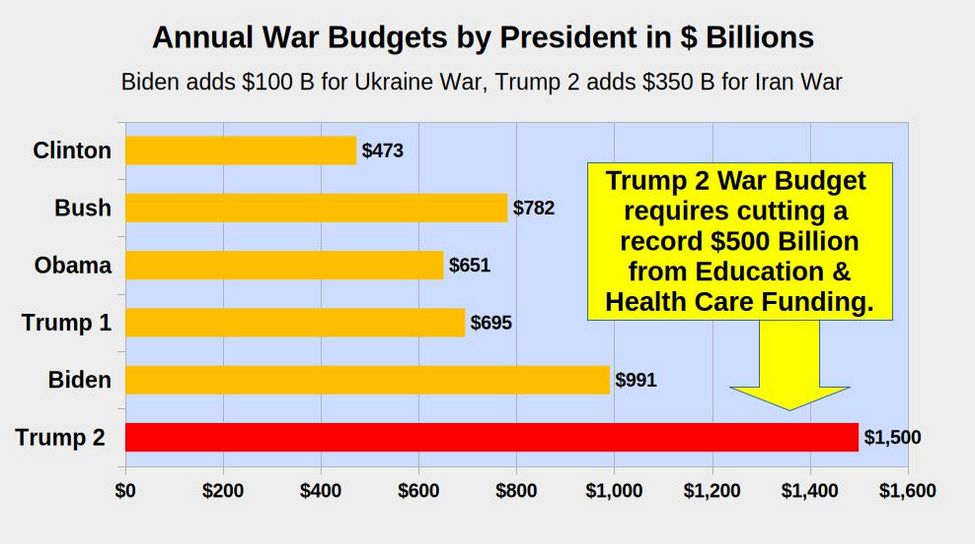
In July 2026, Trump asked Congress to boost the US war budget from $900 billion in 2026 to $1.5 trillion in 2027 (including $350 billion for the Iran War). $1.5 trillion will be the largest war budget ever.
On April 7, 2026, Harvard Professor Linda Bilmes published a study indicating that the Iran War will eventually cost US tax payers trillions of dollars. She noted that while Bush officials estimated the cost of the Iraq War to be $200 billion, it eventually cost more than $5 trillion – all added to our exploding national debt. She also noted that even before the Iran War started in February, the US already owed our past war veterans $7.3 trillion dollars in medical and educational benefits. Here is a LINK to her 19 page study on estimating the hidden costs of wars.
When the United States invaded Iraq in 2003, the national debt was under $8 trillion. Today, the national debt is approaching $40 trillion.
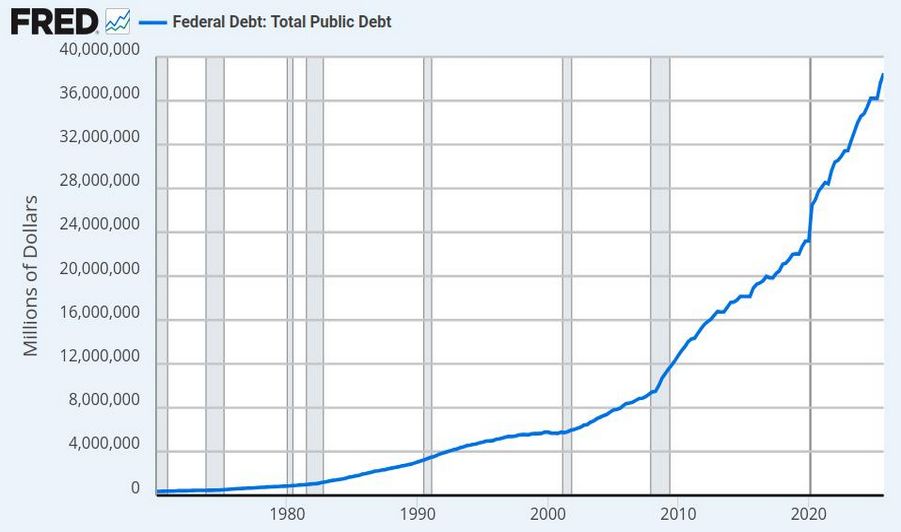
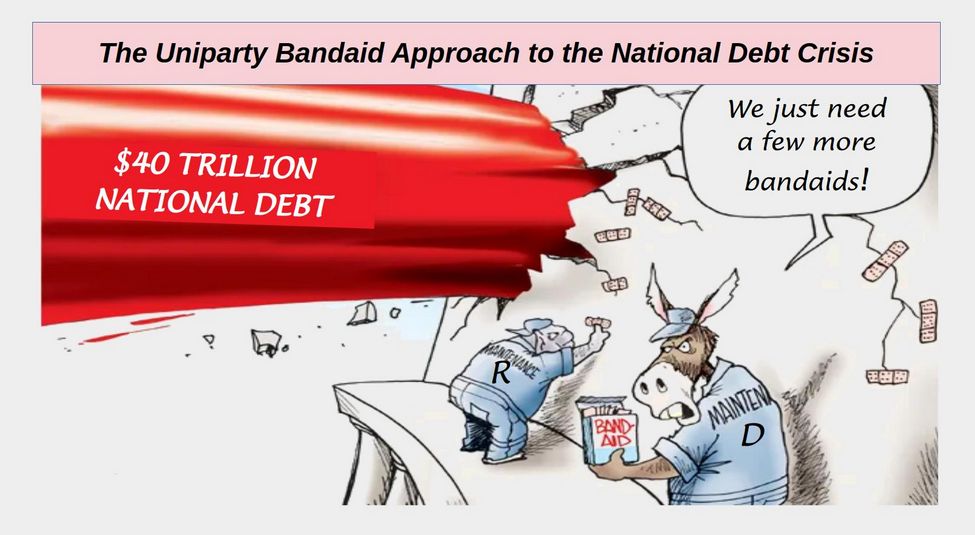
Well over half of this debt resulted from the cost of all of the endless wars the US has been in during the past 26 years. The problem is that both major political parties have consistently voted for more and more war spending.
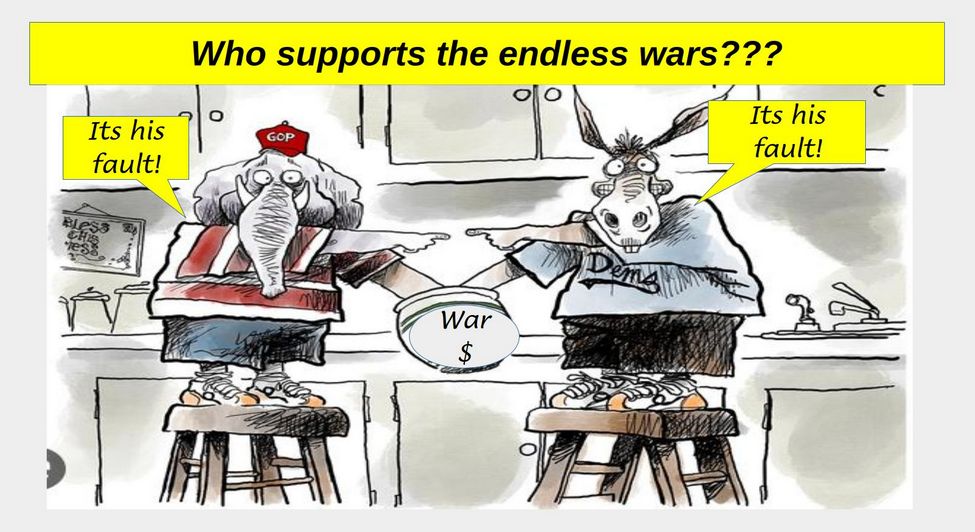
Both parties claim we need to keep spending trillions of dollars on the war machine to protect America from a never-ending series of enemies:
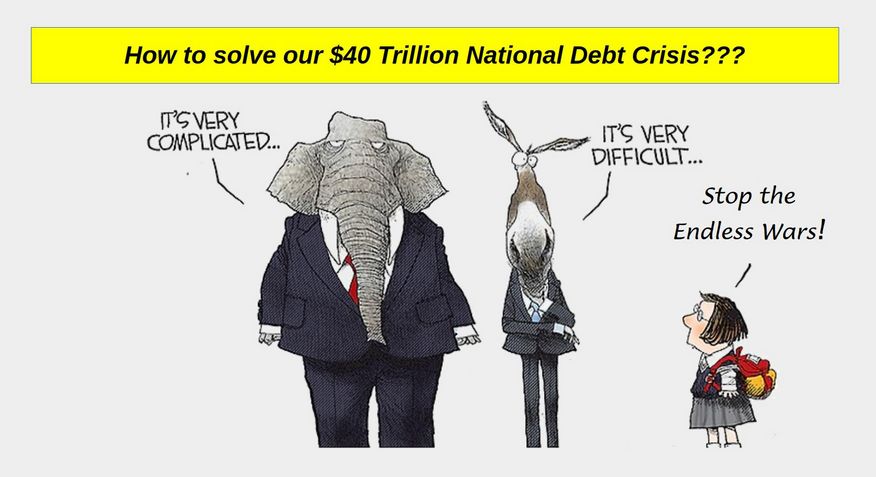
The Iran War is exploding our National Debt.
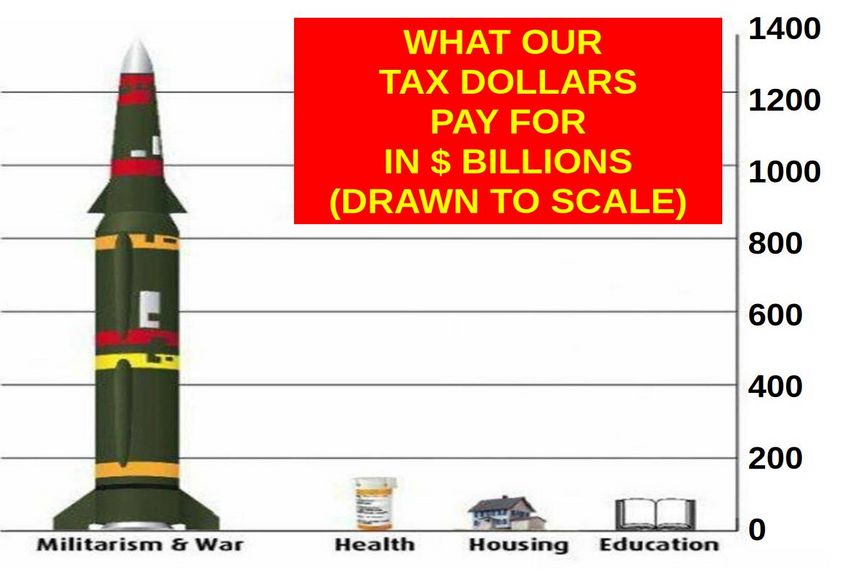
Meanwhile, because the total “discretionary budget” is about $2 trillion, increasing war spending by $600 billion means cutting spending on everything else by $600 billion.
The 2027 War Budget includes an unconstitutional clause to merge the US and Israeli Military
The 2027 National Defense Authorization Act (aka NDAA) will increase annual Pentagon spending by 67 percent to $1.5 trillion. But to add insult to injury, NDAA Section 219 creates a framework for permanent military integration that places our nation's independent decision making at risk.

Provisions in the 2027 NNDAA mandate that the U.S. State Department, the U.S. Commerce Department, and the heads of other Federal departments and agencies cooperate with their Israeli counterparts for the purpose of consolidating U.S. and Israeli military activities.
No foreign nation, regardless of whether it is Israel, Britain, Canada, France, or Japan, should be integrated into permanent executive, military, technological, intelligence, and research structures in a manner that diminishes American sovereignty and democratic accountability.
The legislation specifies Israel-U.S. coordination with America’s Defense Advanced Research Projects Agency (DARPA), the United States Space Command, Biological Warfare, and other war technologies.
The Constitution was designed to preserve the sovereignty of the American Republic through democratic accountability, separation of powers, and civilian control of government. Democracies function because citizens can change policy through elections. But when military, intelligence, and technologies become permanently integrated across different national governments and bureaucracies, decision making can no longer be changed by the voters. The democratic question, regardless of the technology involved, is simple: Who governs these technologies, and for what purpose?
Will decisions remain accountable to elected representatives and the American people, or will authority increasingly reside within security agencies, military institutions, and specialized technical bureaucracies beyond meaningful democratic oversight?
As national security priorities become embedded throughout government, civilian decision making becomes subordinate to military logic. Policies that should be determined through democratic debate become the province of security institutions, technical experts, and permanent bureaucracies.
The Founders repeatedly warned against permanent foreign alliances because they understood the motivations of leaders of other countries may be inconsistent with American ideals or interests.
The Constitution was deliberately designed to prevent precisely this type of entanglement. The President serves as Commander in Chief of the Armed Forces of the United States. Congress possesses the authority to declare war.
Together these provisions were meant to ensure that decisions involving American lives, American treasure, and American military power remain accountable to the American people. Section 219 of the 2027 NDAA bill moves the nation in the opposite direction. It creates permanent structures through which military, intelligence, technological, and strategic functions become increasingly intertwined with those of another government.
There are at least six reasons why Section 219 violate our US Constitution:
#1: IT VIOLATES THE COMMANDER IN CHIEF CLAUSE
Article II, Section 2 of the U.S. Constitution designates the President as Commander in Chief of the Armed Forces of the United States. Congress cannot constitutionally dilute, share, or transfer command responsibilities. The armed forces of the United States must remain exclusively accountable to constitutional authority established by the American people.
#2: IT BYPASSES THE TREATY PROCESS
The Constitution provides a mechanism for creating major international commitments: treaties ratified by two thirds of the Senate. Congress cannot use a spending bill to accomplish what the Constitution requires to be debated and approved through the treaty process. If Congress believes permanent military integration with any foreign nation is necessary, it should present that proposal openly and subject it to the scrutiny required by the Treaty process in the Constitution.
#3 IT PLACES DECISIONS IN THE HANDS OF THOSE WHO HAVE NOT BEEN ELECTED BY THE AMERICAN PEOPLE AND WHO HAVE NOT SWORN AN OATH TO DEFEND OUR CONSTITUTION
Foreign officials do not swear an oath to defend the Constitution of the United States. Yet military integration creates circumstances in which foreign officers, planners, intelligence officials, and strategic personnel may influence decisions affecting American troops, intelligence assets, military technologies, operational planning and decisions to use military force.
#4: IT VIOLATES THE PRINCIPLE OF NATIONAL SOVEREIGNTY
Congress cannot delegate core sovereign responsibilities to another government. The defense of the nation, decisions involving military force, intelligence operations, and national security policy are among the most important powers entrusted to the federal government. A nation that cannot independently determine matters of war and peace cannot truly be considered sovereign.
#5 IT VIOLATES WAR POWERS PROVISIONS AND INCREASES THE RISK OF FUTURE WARS
The Constitution deliberately places decisions involving war and national defense within institutions accountable to the American people. Section 219 weakens that connection. The Founders understood the danger of letting other nations lure us into their wars. In his Farewell Address, George Washington warned against permanent foreign attachments that could pull the United States into conflicts not of its own choosing. His concern was not isolationism. It was independence. Our first president understood that foreign entanglements have a way of creating obligations that gradually supersede national interests. That warning has particular relevance today.
The Iran War demonstrates how rapidly regional conflicts can draw the United States toward broader military commitments. Every new layer of institutional integration increases the likelihood that future conflicts involving Israel become, in practical terms, American conflicts as well.
#6: IT SURRENDERS AMERICAN INDEPENDENCE
The timing could not be more ironic. As America marks the 250th anniversary of its independence, Congress is considering legislation that undermines our independence. The Revolution was fought to secure self government. The Constitution was written to preserve it.
The question is larger than any single administration. Larger than any current conflict. It is whether the United States will remain a nation whose military power is directed exclusively by constitutional institutions accountable to the American people, or whether we will surrender that independence through permanent foreign integration that the Constitution neither contemplated nor authorizes. A nation that cannot control its own military decisions cannot claim to be sovereign - and that is a core reason why Section 219 should be rejected.
Members of Congress swear an oath to support and defend the Constitution of the United States. That oath is a sacred trust. Any measure that diminishes American sovereignty, weakens constitutional self-government, or places the powers of this Republic in alignment with a foreign authority violates both the spirit of that oath and the duty owed to every American citizen.
If you think the idea of Israel taking over the US military is an exaggeration, take a look at this image of the US and Israel leaders discussing their joint plans for attacking Iran.

Congress rejects the Massie Amendment
Congressmen Tom Massie (R-KY) and Ro Khanna (D-CA) submitted an amendment to remove Section 219 from the 2027 NDAA bill. But on July 15, 2026, the House voted against his amendment by a vote of 314 to 104.
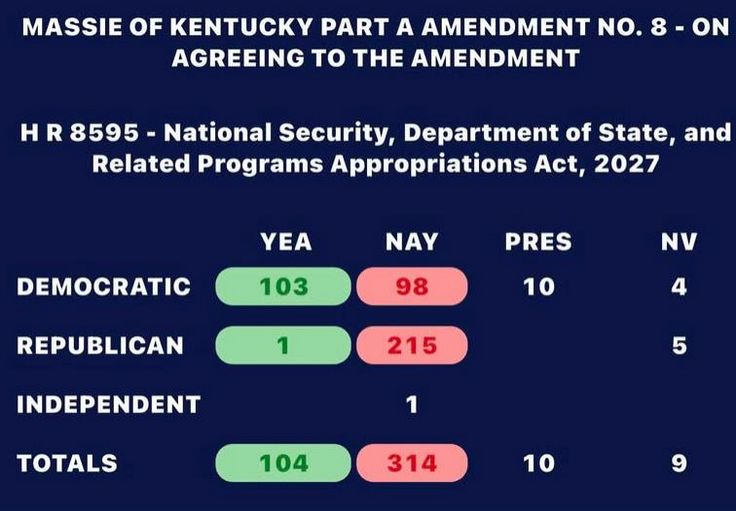
Massie was the only Republican to vote against the US military merger with Israel.
The Senate temporarily blocked the 2027 NDAA bill
On July 13, 2026, the US Senate temporarily blocked the NDAA bill. Senate Democrats claimed they blocked the bill to protest the Trump administration's ongoing military conflict with Iran. Senate Majority Leader Chuck Schumer (D-N.Y.) stated the bill was a war-funding authorization for the conflict in Iran without appropriate congressional authorization or bipartisan strategy. But in fact, Schumer is one of the biggest war hawks in the Senate. Look closely at the chart behind Schumer and you will see that what he is really calling for is escalation of the war with Iran rather than negotiation! Schumer wants more sanctions on Iran and more assassinations of Iranian leaders as well as US Control over the Strait of Hormuz.
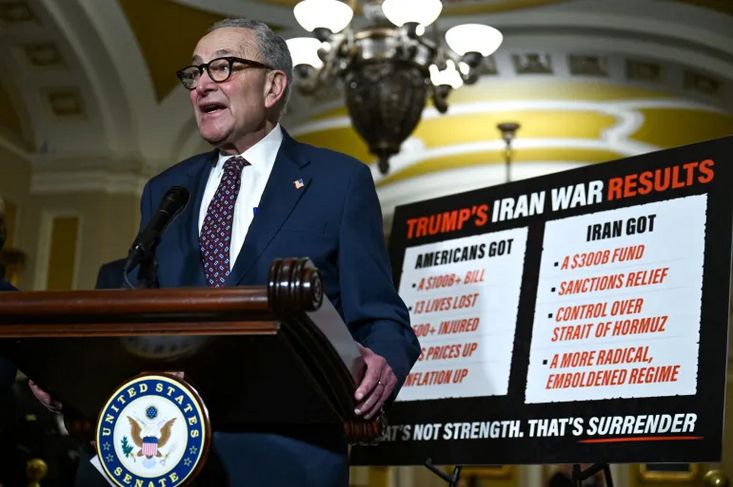
It is therefore certain that in the coming weeks, the Senate will pass the 2027 NDAA with Section 219 and with the record amount of war spending. Meanwhile, the Iran War goes on with no end in sight - and is costing US taxpayers over $1 billion per day
The Israeli Lobby… or the War Machine?
A lot of people are blaming the Iran War on a group of people they call the Israeli lobby – who are a group of very wealthy people who have elected their friends to Congress. Sadly, it is likely that the corruption runs much deeper. In the 1950’s, President Eisenhower warned against what he called the “Military Industrial Complex.” Here we will simply call them the War Machine.
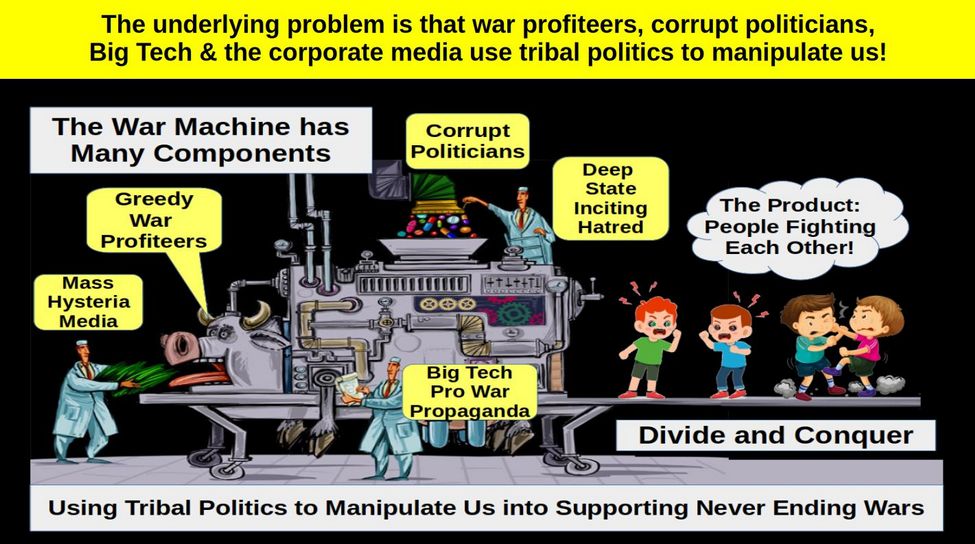
The Israeli lobby is certainly one component of the war machine. But there are lots of other components including the corrupt corporate media, Big Tech corporations and War Profiteers (aka corporations making billions in profits by making millions of bombs.) Put simply, “War is a Racket.”

The Coming Economic Crisis
It is therefore highly likely that the coming Oil Crisis will only get worse. This will lead not only to rising gas prices, but also rising energy prices, and rising food costs. These rising prices will mean that Americans will have less money to spend on everything else – which will cause a huge number of businesses to fold and a huge number of people to lose their jobs.
According to the US Bureau of Labor Statistics monthly report issued on July 2, 2026, covering from May 1 to June 1 2026, Americans participating in the workforce fell to 61.5% - its lowest level outside the COVID-19 pandemic in 50 years since June 1976:
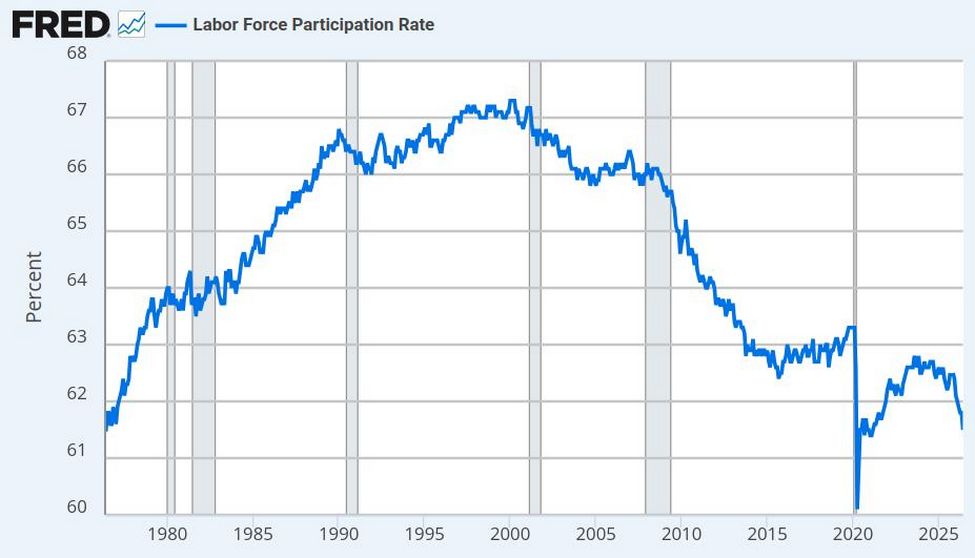
Here is the Labor Force Participation Rate for all of 2026:
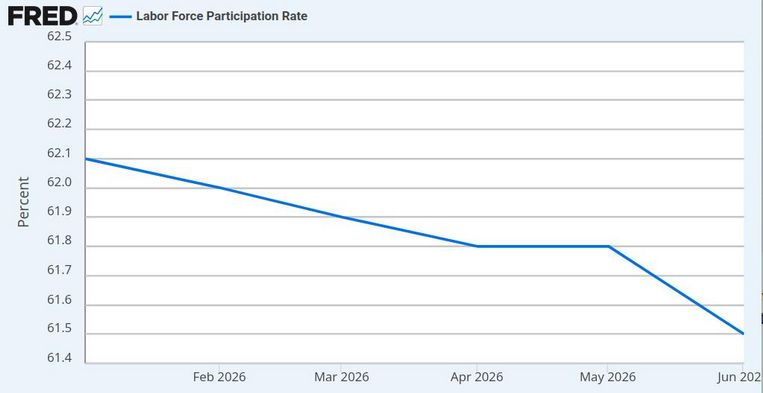
The above chart shows that the US economy was extremely week even before the Iran War. But people really started losing their jobs in May 2026. On page 4 of the BLS monthly report, the workforce population grew by 112,000 but the number of people who left the workforce due to the loss of their job grew by 720,000 for a combined increase in “Not in the Labor Force” of 832,000. Combine this with an increase of 200,000 in the number of people who could only find part time work and the net result is an increase of about one million American workers in May 2026 whose job situation got much worse.
For the first time in US history, 106 million people were “Not in the Labor Force.”
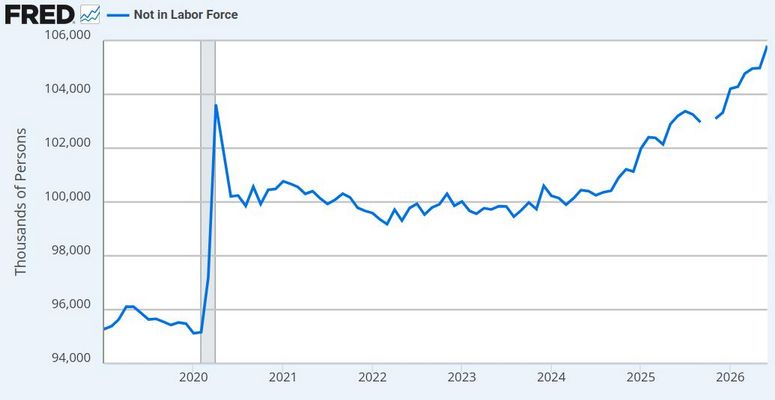
The next BLS job report is due in August. It is likely that it will show another steep increase in the “Not in the Labor Force” number – with even bigger increases to follow in September and October 2026.
The Iran War Interest Rate Trap
Normally, the Fed tries to reduce the effect of job losses by lowering their interest rate. However, when there is rampant inflation, the Fed raises interest rates. The Iran War has created an Interest Rate trap that forces the Fed to raise interest rates despite the economy crashing. Two Year US bonds are a leading indicator of future interest rates. Here is an image showing the Inflation to Interest Rate Trap began in April 2026:
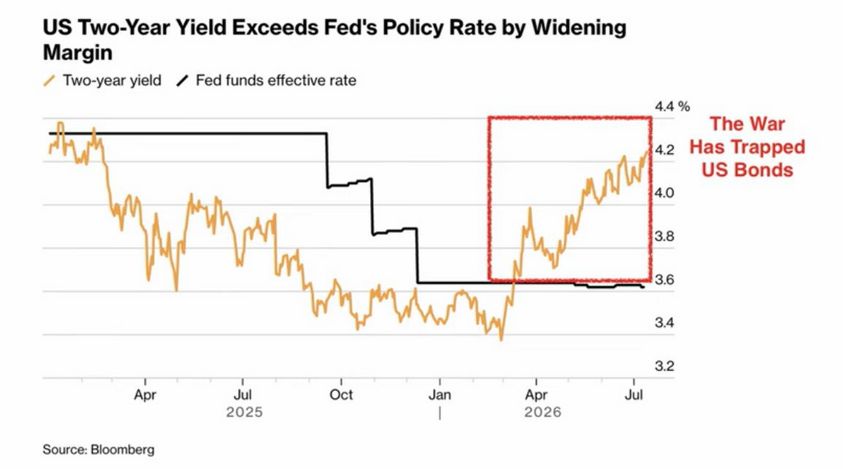
The reality of the two year bond auctions will likely force the Fed to raise the Fed Funds rate in August 2026 – which will only cause more business failures and more job losses.
The Coming Consumer Debt Crisis
More than 100 million Americans are already facing a massive credit card debt problem. The underlying cause of this debt problem was not only the loss of living wage jobs, but the near doubling of credit card interest rates in the past 10 years from 12 percent in 2016 to 22% today.
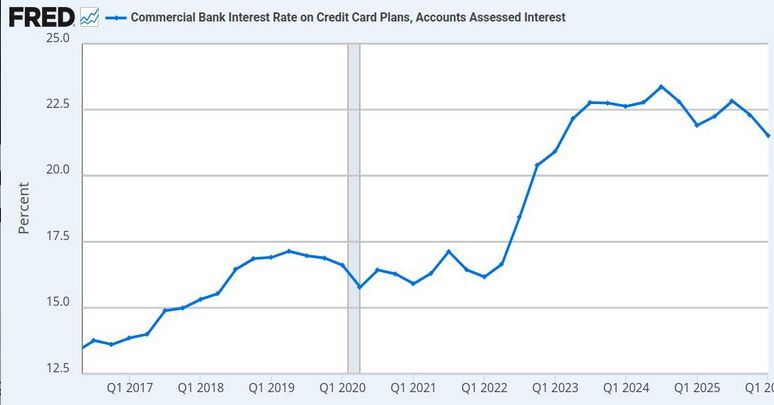
During the 2024 Election, Trump not only promised to end forever wars, he also promised to reduce credit card interest back to its historic average of 10%. This was a major reason many poor people voted for him.
About 227 million Americans—comprising over four in five U.S. adults—collectively owe approximately $1.27 trillion in credit card debt.
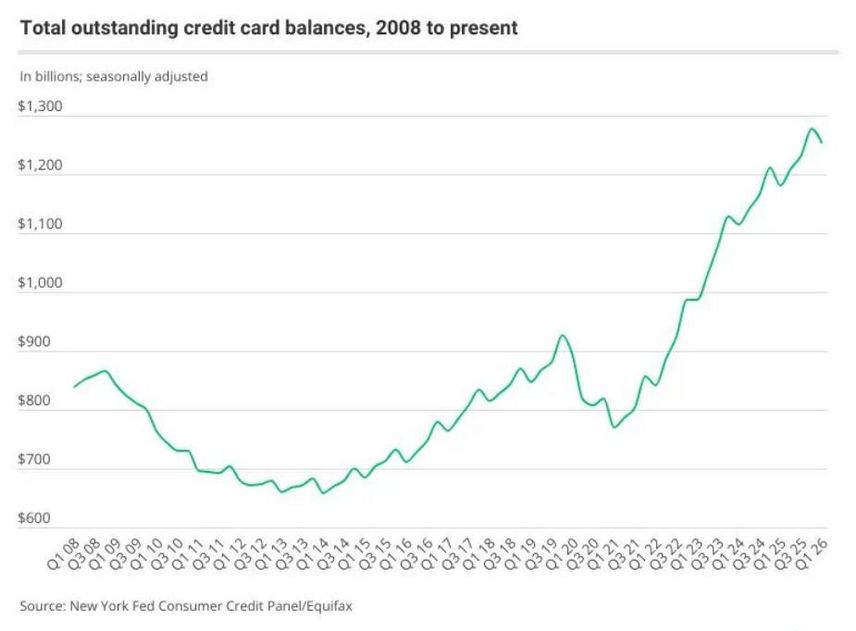
This is the largest amount of credit card debt ever owed by American families. Americans have paid $2 trillion in credit card interest since 2010.These cardholders are exposed to record-high interest rates that further raise their credit costs. This translates to 111 million Americans - over 40 percent of all U.S. adults—who are unable to pay off their credit card bills each month, trapping them in cycles of persistent debt that balloons ever-higher due to record-high, industry-inflated interest rates and predatory bank late fees
From 2007 to 2026, banks doubled their profit margins by doubling their credit card charges. As a result, Americans now pay the most money ever recorded in credit card interest charges and fees. From 2018 to 2026, the average monthly credit card payment rose by $560, or 38 percent from $1,441 to nearly $2,000 per month. Credit card balances have risen by $482 billion since Q1 2021 - a 63% increase over five years. One in four Americans has at least $10,000 of credit card debt. Roughly 13% of credit card balances are at least 90 days past due, marking the highest delinquency rate seen in 15 years. Annually, these low income Americans pay more than $200 billion in credit card interest payments.
The national average card debt among cardholders with unpaid balances in 2025 was $7,886, up 2.8% from $7,673 in 2024. Washington has the fastest-growing card debt. That state’s average card balance grew 12% from 2024 to 2025, rising from $8,086 to $9,039. For all credit cards, the average Interest Rate in Q2 2026 was 22% per year. Thus, if a person has a credit card debt of $8000, they must pay $1,760 in interest payments per year or $147 per month just to keep their principal balance from rising.
Nor was this debt accumulated by too many spending sprees at the local shopping mall. Instead, the number one cause of inflated credit card debt was to pay for medical bills that were not covered by health insurance. According to a 2022 poll from the Kaiser Foundation, almost half of Americans have a major medical debt.
The rapid increase in the price of food in 2027 will only make the financial problems of the working poor even worse. With food and gas prices rising, Americans have already accumulated more than a trillion dollars in “survival debt”—liabilities accrued to pay for everyday expenses. As more people struggle to make ends meet and consumer debt reaches record highs, at some point, the whole financial debt bubble is likely to explode into the worse Mega Depression of all time.
The Coming Political Crisis
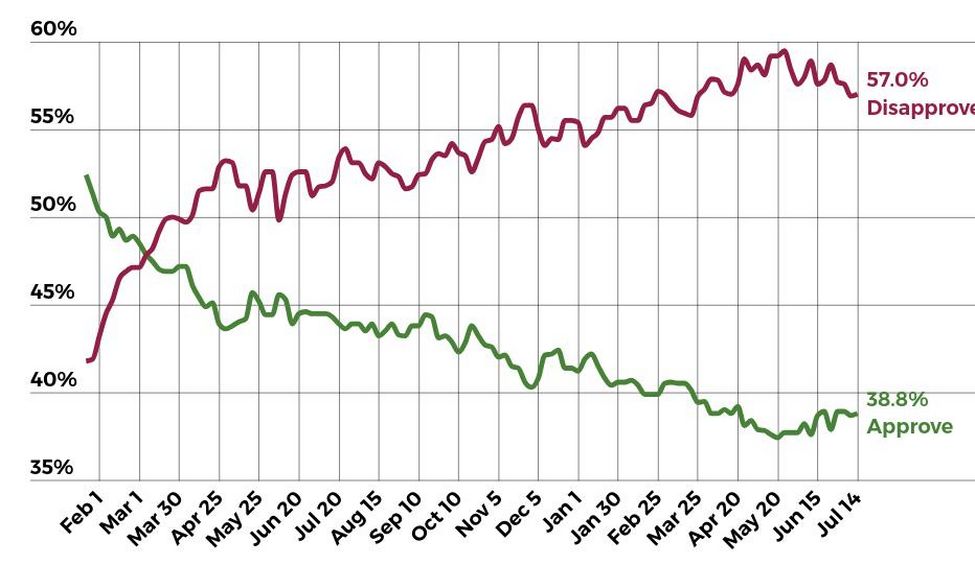
As more people lose their jobs in the coming months, voters are going to turn against Trump and the Republican party. Trump’s approval rating is already very low and as truth of Iran war comes out, Trump’s approval rating is likely to get much worse:
Democrats lead the 2026 generic congressional ballot by an average of 6.3%, with aggregate polling from July 14, 2026, showing Democratic support at 48% compared to 41.9% for Republicans.
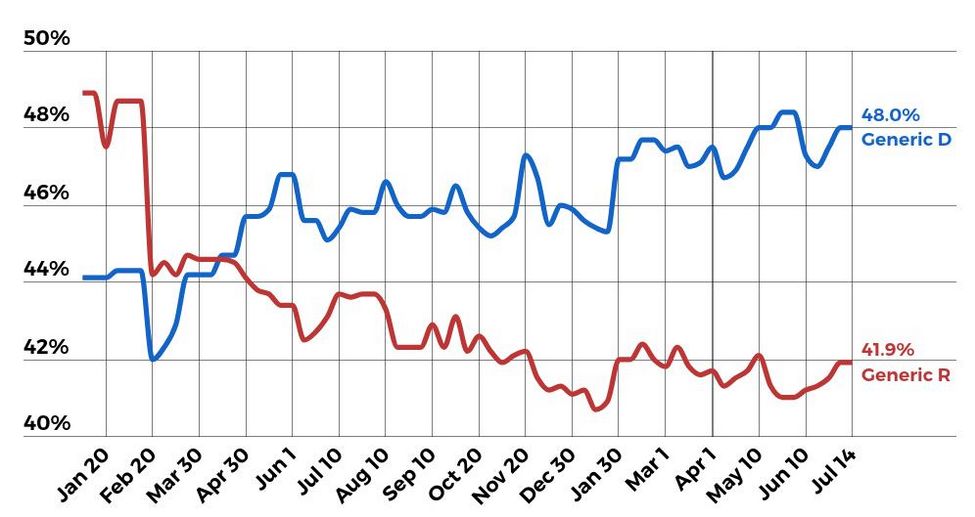
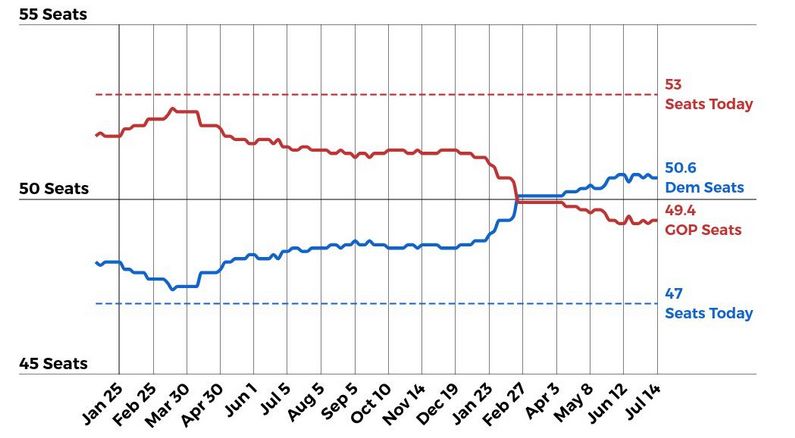
American voters, and particularly Independent swing voters (the ones who decide all elections), have shown a consistent tendency to vote based on whether the economy was getting better or worse. As the economy collapses and inflation increases in coming months, it is likely that this gap will grow even wider – leading to a Democratic takeover of the House of Representatives in the 2026 Fall election. The only real question is whether the Democrats will take over the Senate. To do this, they will need to win four Senate seats currently held by Republicans. Currently, the Senate races in Alaska, Iowa, Maine and Texas are listed as “Toss Up.” However, given that Republicans will be blamed for the coming economic disaster, it is likely that Democrats will win all four of these races this Fall. Here is the current Trend Line for the Democrats to take control of the Senate:
Here is the current Texas Trend Line:
If the Democrats take over both the House and the Senate, we can expect 2027 to be taken up with Trump impeachment hearings. Unfortunately, impeaching Trump will do nothing to improve the economy. It is therefore likely that the economy will continue its rapid downward spiral – possibly even worse than the 1929 crash that led to the Great Depression.
Americans losing trust in both major political parties
America has never been more politically divided than it is today. Membership in the two major political parties is at an all time low. A Gallup 2025 poll found that a 45% of voters identified as Independent while only 27% identified as Republicans, and 27% identified as Democrats.
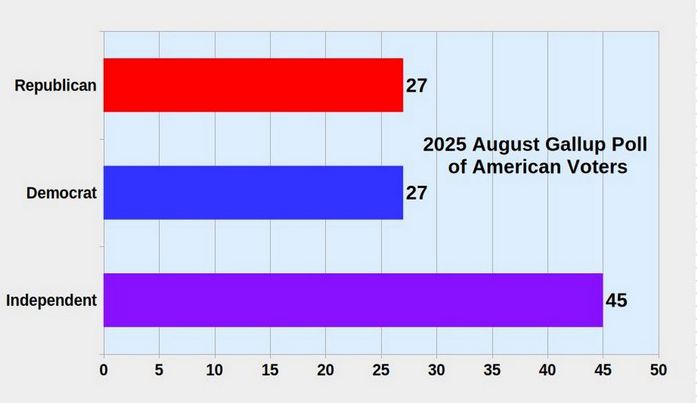
A record number of Americans now call themselves Independents – largely because they have concluded that neither of the major political parties represents them and their family.
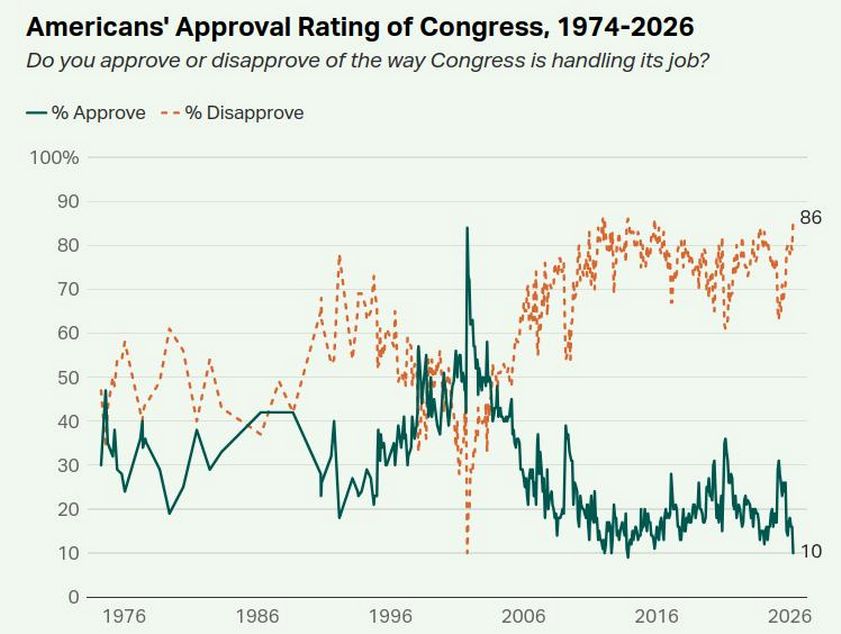
As if this was not bad enough, a 2026 Gallup poll found that a record 86% of Americans disapprove of Congress:
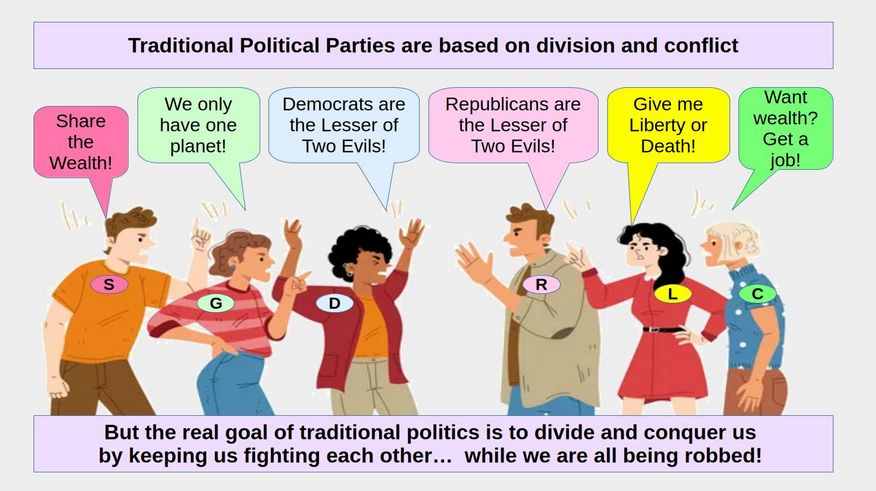
Meanwhile, the leaders of both major political parties spend all of their time attacking the other party rather than working together to solve problems:
Americans lack of trust in the corporate controlled political parties is matched by an equal lack of trust in the corrupt corporate media. The latest Gallup poll on whether the mass media reports the news “fully, accurately and fairly” found that two out of three Americans have either very little trust or no trust at all!
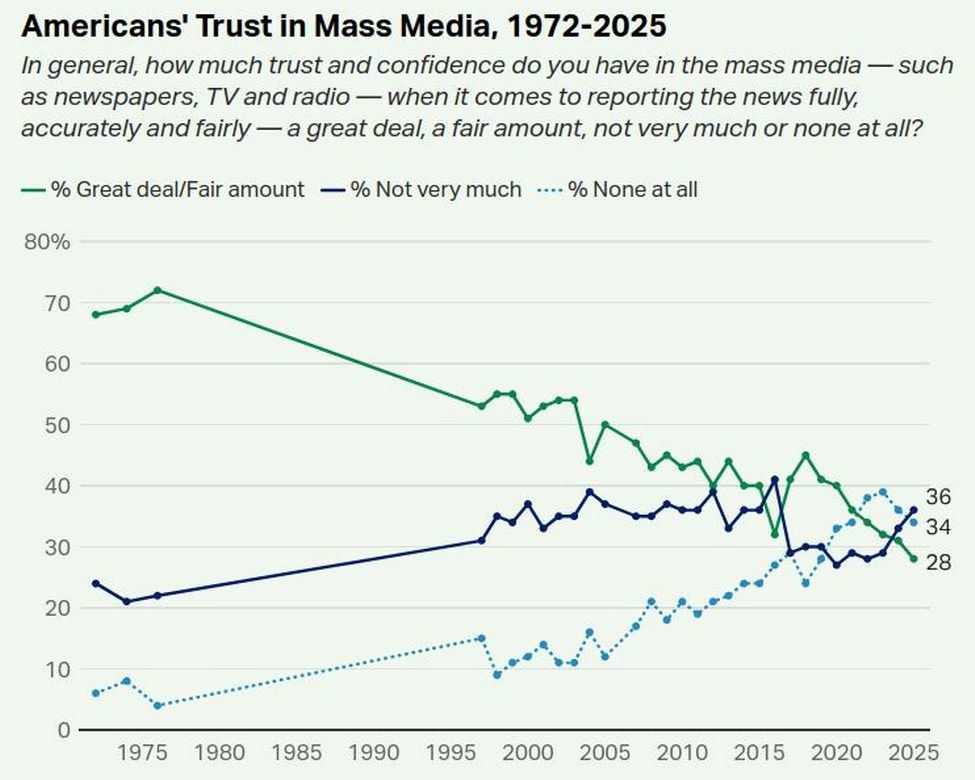
It is time to seek out and promote Independent media sources who have the wisdom to learn the truth and the courage to tell the truth.
Will the coming economic and political crisis be bad enough to inspire the American people to take action to fix these problems?
The coming crisis will be bad. But it may also create the space for a new kind of politics – one based on building relationships and understanding rather than adversarial back stabbing and demonizing. This new kind of politics requires a new way of thinking – a way of thinking that moves past the old divisions of Right versus Left, Conservative versus Liberal and Capitalist versus Socialist.
We need to stop focusing on labeling people. Instead, we need to replace the old Identity politics – which do nothing but create division and conflict - with a new kind of Issue-based politics. Instead of focusing on the color of one’s skin, we need to focused on solutions to problems based on values we all share in common. The best way to resolve conflicts is through research and respect rather than argument and division.

Here are ten core beliefs for a different kind of politics:
#1 We need to restore respect for the history and meaning of our US Constitution as a foundation for establishing a common shared vision and a framework for solving problems and resolving conflicts.
#2 Censorship of ideas is the beginning of tyranny. We are all on the same team and we need to talk with and listen to those who disagree with us. Differences of opinion can be an opportunity to better understand a different point of view.
#3 The first step in problem solving is admitting that problems exist and being willing to take the time to understand the underlying causes of our problems.
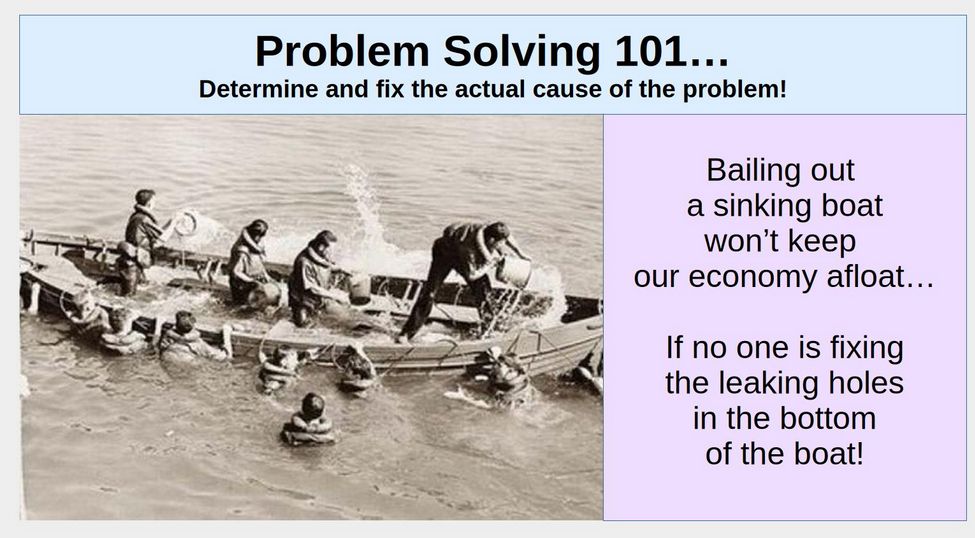
#4 The second step of problem solving is considering options that address more than just the surface symptoms but also the underlying causes.
#5 The third step in problem solving is choosing options that lead to win-win outcomes for all Americans.
#6 We need to use science, truth and compassion to help us resolve differences with others. The values we have in common are more important than any differences of opinion.
#7 Economic freedom requires political freedom. Political corruption eventually leads to economic collapse. We need to end the selling of elections to the highest bidder – which results in the election of corrupt candidates – and restore free and fair elections.
#8 The short-term greed of wealthy multinational corporations should never be placed above the long-term needs of families and children.
#9 Peace is better than war. We need to end not only dangerous wars around the globe but also political wars here at home.
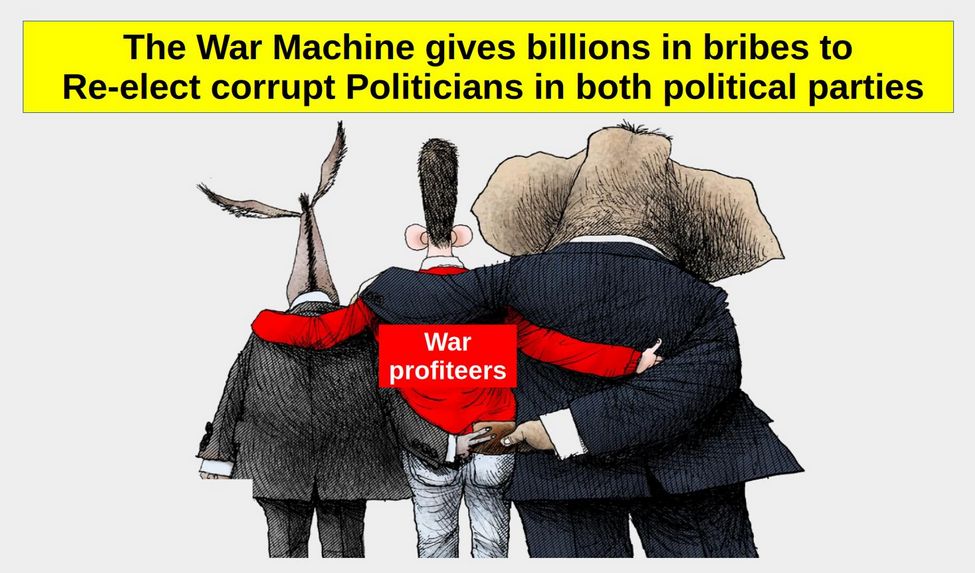
#10 The greatest threat we face is nuclear war. We should all learn and teach our children peaceful conflict resolution as a way to reduce the threat of nuclear annihilation.
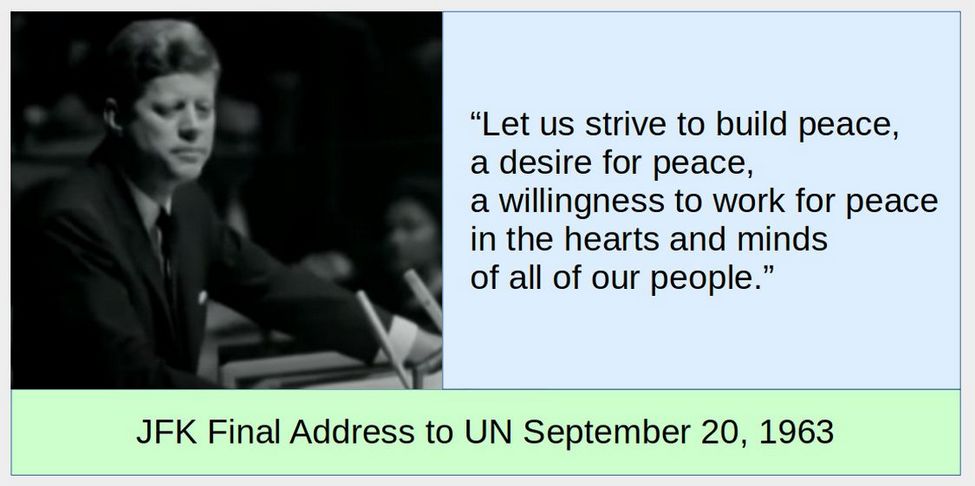
Our Peace and Prosperity Plan… Liberty and Justice Parties
We need a space and a way to move beyond rigid (and often corrupt) political parties in order to solve problems and build a better future for all of us. Creating a new political movement will not happen by passively watching TV commercials. It will take the ACTIVE INVOLVEMENT of caring people in every community all across America.

Our goal is to recruit members from all political parties to what we are calling Liberty and Justice Parties. Our Liberty and Justice Party is not a political party (at least not yet). It is an informal social gathering of concerned citizens. There is no need to leave your current political party – unless you want to. There is no need to join a new political party – unless you want to. Think of it as a series of local potluck picnics. We may discuss how to take back our political parties. Or we may talk about how to create more jobs in our local communities. We may also discuss how to solve problems by listening and learning from those with a different point of view.

In addition to our Liberty and Justice Parties to reunite America, we are providing two other important resources. The first is a series of free books on the history and meaning of our US Constitution. These are free open source books which you can download and share with others.

Also, we are providing links to more than two dozen Independent Media websites and video channels where you can learn the truth about what is actually happening during the coming economic and political crisis. Here is the LINK to our page on Independent Media News sources.
We will be posting more information about our Liberty and Justice Parties in the coming months. If you think the time has come for a new and different sort of political movement, we hope you will join us. To sign up for our free newsletter, send an email with a brief introduction to david (at) reuniteamerica.us.
We look forward to meeting you!